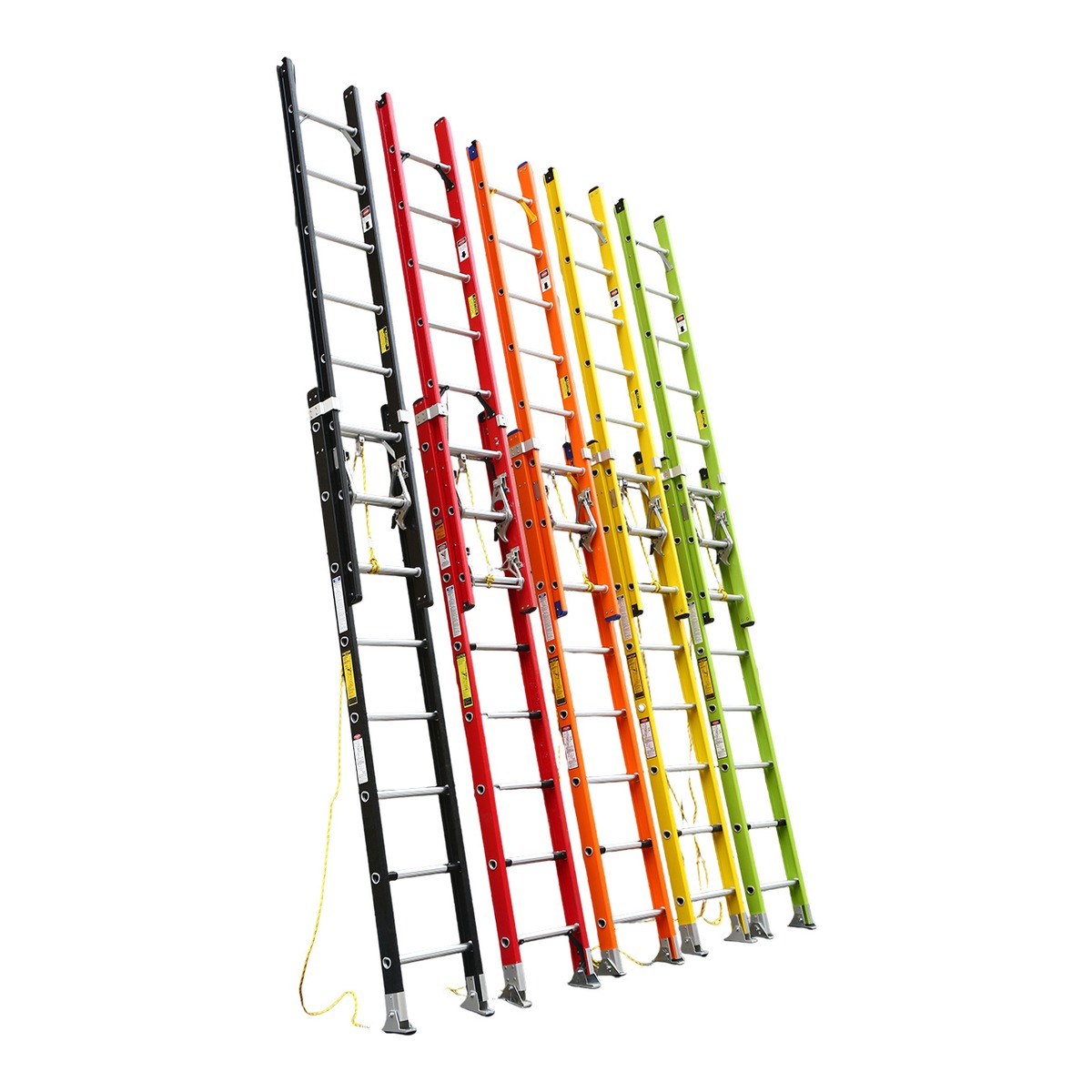
For fiberglass ladders, this guide focuses on extension models: shortlist the exact model and required dimensions, then match the quotation to its instructions, packing and applicable test documents. Side rail size, colour or the word “fiberglass” cannot establish the finished ladder's rating or suitability for a particular task.
An importer needs a specification that the supplier, inspection team and receiving warehouse can all identify. This guide focuses on that purchasing record. The separate fiberglass material and FRP guide explains glass reinforcement, resin and material documentation.
Define the access task before choosing a length
State whether the ladder is intended for access to an elevated surface or for a task performed from the ladder. Include available storage space, transport constraints and the conditions in which the customer expects to use it. These details help frame the model discussion without turning a nominal length into an unsupported reach claim.
The Canadian Centre for Occupational Health and Safety's extension ladder guidance describes extension ladders as non-self-supporting and emphasizes the manufacturer's labels, the required section overlap and a load rating appropriate to the user, equipment and task. Ask for the selected model's instructions when assessing these points.
A published “open height” is a specific catalogue field. It should not be renamed “safe working height” or “maximum reach” in an importer catalogue without the corresponding manufacturer definition. Preserve the original field name and unit in the comparison.
Compare 80 mm and 86 mm fiberglass extension ladder options
The SSLADDERS two-section fiberglass extension ladder family groups 80 mm and 86 mm side rail options. Compare complete model rows rather than treating rail width as a performance ranking.
Two published models illustrate the distinction:
| Published field | SSF804-8 | SSF864-8 |
|---|---|---|
| Side rail profile | 80 mm | 86 mm |
| Step arrangement | 8×2 | 8×2 |
| Open height | 408 cm | 408 cm |
| Weight | 14.4 kg | 17 kg |
| Packing size | 260×45×16 cm | 260×45×17.5 cm |
| Maximum load | 150 kg | 150 kg |
Both rows show the same open height and maximum load. Their profile, published weight and packing dimensions differ. The net or gross basis of the weight remains to be confirmed for freight planning. These differences do not establish a separate electrical rating or certification.
Copy the whole model code into every request. “Eight-step fiberglass ladder” would leave the rail option and section arrangement ambiguous. If you also compare three-section fiberglass extension ladders, keep them in a separate comparison group so the construction and dimensions remain clear.
Connect each document to the product being ordered
A fiberglass ladder test report checklist should begin with identity and scope. Request the relevant documents by name and ask how they apply to the exact product and order. A file with a familiar laboratory logo is not sufficient to resolve those questions.
| Document question | What the buyer should establish |
|---|---|
| What was tested? | Identified material, component or assembled ladder and its model reference |
| Which requirement was assessed? | Named standard or test method and the stated edition, where applicable |
| Who issued the record? | Test body or document issuer and the report reference |
| Under what conditions? | Test conditions, limitations and the results actually reported |
| Why does it apply to this order? | Connection between the tested item, selected model and agreed supply specification |
A chemical screening report, a rail material report and a finished-ladder performance report answer different questions. Keep them separate in your purchasing file. If the destination market requires a specific document, name that requirement before quotation instead of asking only for a “certificate.”
For electrical-use questions, include the actual application and request the applicable finished-ladder documentation. In the United States construction context, OSHA's ladder rule addresses nonconductive side rails where contact with exposed energized equipment could occur. This requirement does not certify a particular product or authorize live electrical work. A material description or withstand-voltage entry cannot replace the relevant work procedures and model instructions.
Review packing and receiving requirements together
For bulk fiberglass extension ladder orders, confirm the final protected package length, width and depth, units per package, and gross weight. The published packing for the two-section family is Cover & Shrink; additional protection, labels or cartons require order-specific review.
Give the supplier any receiving restrictions, such as storage-rack dimensions or the equipment available to unload long packages. Ask which parts need protection in transit and how model identification will remain visible on the packed product. This turns the packing discussion into a practical receiving plan.
Keep a record of the reviewed sample, final model specification and agreed packaging. For the shipment inspection, use the same identifiers and agreed criteria. Photographs can document identification and visible condition; they do not replace the required functional or performance evidence.
Frequently asked questions
Does a wider fiberglass side rail mean a higher load rating?
No. Rail width alone does not establish the finished ladder's rating. In the two model rows above, both published maximum loads are 150 kg. Use the specific model specification and applicable documents rather than assigning a different rating from the profile size.
Can a material report prove electrical-use suitability?
Not by itself. Review what specimen was tested and which property the report assessed. Ask for the electrical documentation applicable to the selected ladder, its test conditions and its limitations. Do not treat chemical screening or the material name as an electrical approval.
What is the minimum wholesale order?
SSLADDERS publishes a minimum of one 20-foot container per order. Confirm the proposed model mix, quantities and packing. Usual lead time is 30–45 days depending on products and order requirements; the current ordering terms also describe the paid-sample policy.
What should we send to a fiberglass extension ladder supplier?
Send the product link, full model codes, quantities, destination, intended task, packing and labelling requirements, requested documents and timing. Start from the fiberglass ladder range, then use the contact page to request a model-specific quotation and document review.