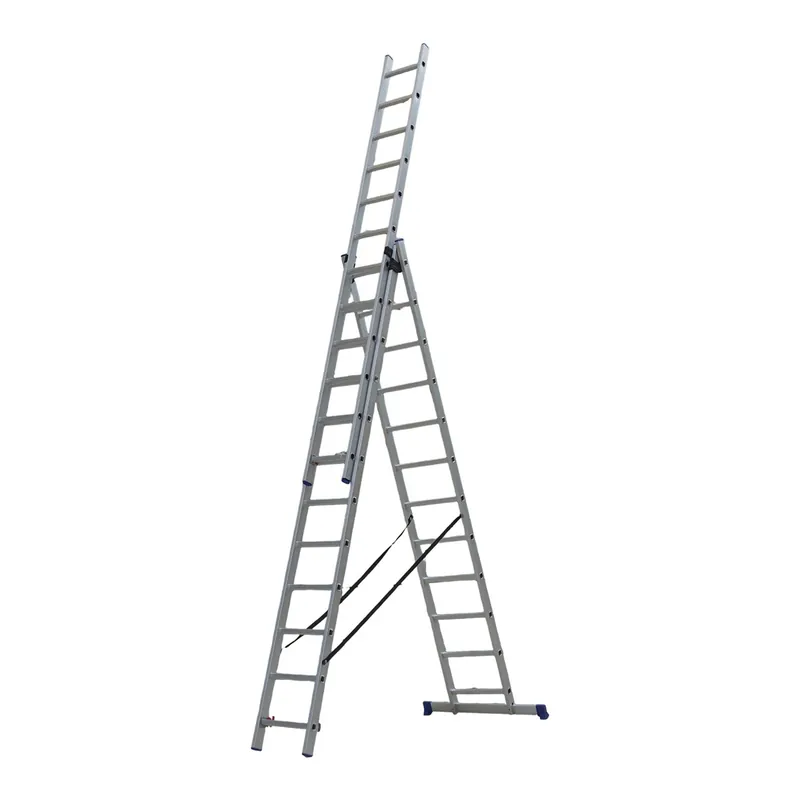
Aluminium alloy ladders use metal profiles whose specifications include an alloy grade, a temper and physical dimensions. In 6063-T5, 6063 identifies the alloy and T5 identifies its processing condition. Reading these details together helps buyers understand the aluminium ladder material behind a product description.
The SSLADDERS aluminium ladder range uses 6063-T5 profiles, with the supplied material report serving as the reference across the range. Finished dimensions and product specifications depend on the selected model.
Aluminium, also spelled aluminum, is the base metal. The alloy designation identifies a controlled composition, while the temper describes its processing condition. A profile drawing then defines the physical shape. None of these items should be used alone as a substitute for the finished ladder’s specification.
Alloy ladders: what does 6063 identify?
6063 is an aluminium alloy containing magnesium and silicon. It is used for extruded profiles where formability, surface finish and the ability to produce the required shape are useful. Hydro’s 6063 overview describes its general characteristics and applications.
The designation is useful because “aluminium alloy” alone leaves the actual grade unspecified. However, a 6063 label does not state the wall thickness, finished component dimensions or a ladder load rating.
When reviewing a quotation, connect the grade to the named part. A document for a tube should not automatically be applied to every side rail, joint or other component in the same ladder.
What does 6063-T5 mean for aluminium ladder profiles?
In 6063-T5, the T5 suffix identifies the temper. T5 describes material cooled after an elevated-temperature shaping process and then artificially aged. T6 describes a different route involving solution heat treatment followed by artificial ageing. These definitions are given in Hydro’s 6063 alloy data sheet.
For purchasing, retain the complete designation in the specification. If a quotation, drawing and material document show different tempers, clarify the difference before treating them as equivalent.
Read the material designation and the drawing together:
| Specification field | Meaning | What to compare |
|---|---|---|
| 6063 | Aluminium alloy designation | The grade recorded for the relevant profile |
| T5 | Temper or processing condition | Whether the quotation and material document use the same designation |
| Profile cross-section | Shape of the component | The drawing reference and cross-section dimensions |
| Wall thickness | Thickness of the material in the profile | The specified locations and tolerances |
An alloy designation does not replace the dimensional drawing, and the temper name is not a finished-ladder load rating.
How extruded aluminium ladder profiles are made
Extrusion forces an aluminium billet through a shaped die opening. The resulting length has the required profile cross-section and can undergo further operations such as cutting, punching, machining or bending. The Aluminum Association explains the extrusion and fabrication process.
A drawing turns that shape into a purchasing specification. It should identify the dimensions and tolerances that matter to the part. An outside diameter, for example, is a different measurement from wall thickness; confirming one does not establish the other.
When comparing aluminium ladder profiles, ask which drawing revision the sample or test report represents. This makes a dimensional result useful for the order rather than leaving it as an isolated number.
How to read an aluminium material test report
A report can contain several kinds of evidence. Read the item name and unit before comparing the result with a requirement.
| Test information | What to look for |
|---|---|
| Chemical composition | The elements analysed, their reported percentages and the comparison criteria |
| Tensile strength | The measured stress value, test method and specimen identity |
| Elongation after fracture | The reported percentage and the gauge-length designation used |
| Dimensions | The actual feature measured, its unit and permitted tolerance |
| Macrostructure or microstructure | The particular observations and acceptance criteria recorded |
A material tensile result in MPa does not specify a finished ladder’s rated load. Elongation after fracture describes the tested specimen; it is separate from allowable movement of the assembled ladder.
Read the report’s limitations alongside its results. Check who provided the sample information, where the acceptance criteria came from, which tests fall within the stated accreditation scope and what uses the document permits. A report’s cover logo does not replace those details.
Ask about the material behind an aluminium ladder quotation
When contacting an aluminium ladder supplier, identify the model and the information needed for your purchasing review. A focused enquiry can ask for the alloy and temper of the relevant profile, the drawing reference and the material documentation applicable to the order. Include quantity and destination market so the request has a clear commercial scope.
Browse the aluminium ladder range to select a product, then contact SSLADDERS with the details. For a comparison between materials, read the aluminium versus fiberglass ladder guide. The fiberglass material and FRP specification guide explains the corresponding composite terminology.
Choose a model before requesting material documents
Start with the ladder configuration you need, then use its published model table to prepare a comparable request:
- Household step ladder models: compare step count, open dimensions, net weight and packing.
- Three-section aluminium ladder family: review the channeled and smooth side rail options and the model table.
- Multipurpose folding ladder family: compare the A and B joint-size options, weights and packing sizes.
Record the exact model code, quantity, destination market and packaging needs. Ask which material document applies to the specified component and order; a material report does not replace the finished ladder specification.