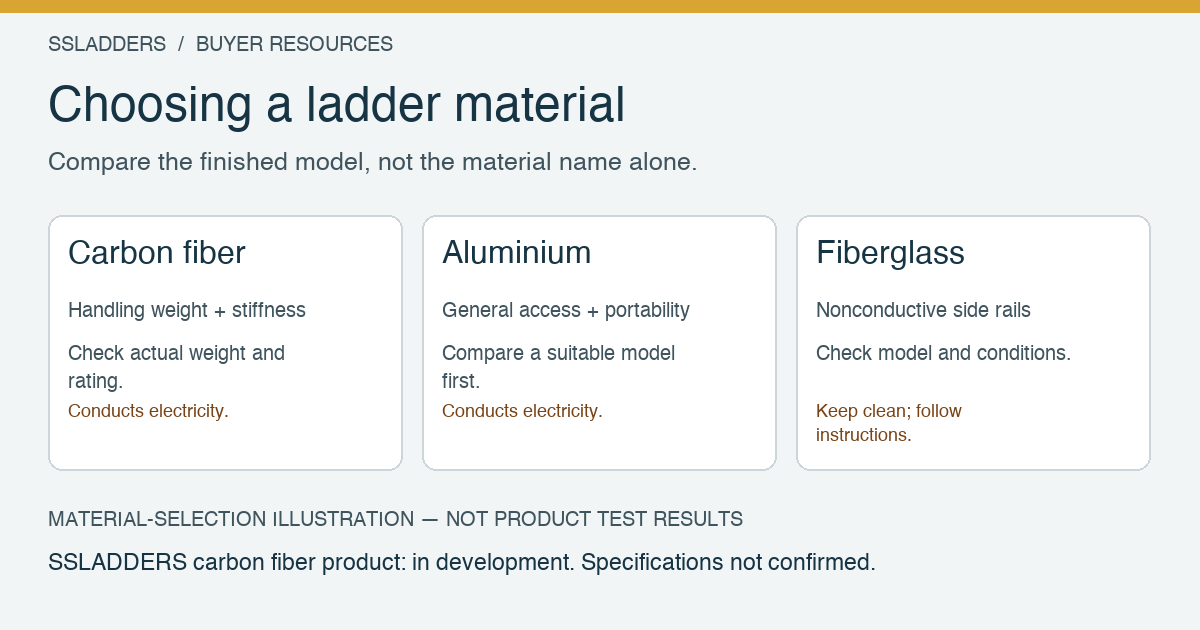
A carbon fiber ladder is worth considering when frequent carrying makes weight an important part of the buying decision. Its main appeal is the potential to combine low weight with the stiffness needed for the task. The value depends on how a finished model compares with suitable alternatives.
If your routine includes unloading a ladder, carrying it between work areas and packing it away again, a useful reduction in weight may justify a closer look. Start by matching the ladder to the job, then compare handling, specifications and price.
Are carbon fiber ladders electrically conductive?
Carbon fiber conducts electricity. Do not rely on a carbon fiber ladder for electrical insulation or use it where it could contact exposed live electrical equipment. Toray’s technical manual confirms the material’s conductivity.
What is a carbon fiber ladder?
Carbon fiber ladder components use carbon fibers combined with a polymer resin, commonly described as carbon fiber reinforced polymer, or CFRP. A ladder may combine carbon fiber rails with steps, hinges or other fittings made from different materials, so ask which components actually contain carbon fiber.
The material offers lightweight construction, stiffness and strength. Performance also depends on fiber direction, resin and manufacturing quality, as explained in Clearwater Composites’ material guide. The finished ladder’s rating remains the basis for choosing a model.
Which buyers benefit most from lower handling weight?
Compare two routines: a ladder used occasionally in one room, and one carried between several work areas during a shift. In the second routine, repeated lifting and carrying give weight reduction a clearer practical purpose.
Frequent carrying: compare carbon fiber when moving a ladder between locations is a recurring part of the job and the current model is difficult to handle.
Occasional use: a suitable aluminium ladder may already meet the need; a higher price needs a practical benefit.
Electrical exposure: do not choose carbon fiber for insulation. Select equipment appropriate to the task and follow the applicable electrical safety procedures.
For a sample evaluation, follow the normal route from storage or vehicle to the work area. Assess carrying balance, grip positions and ease of loading as well as weight. Check the closed dimensions against the available storage space.
A lighter model may be easier to handle, but its size and the manufacturer’s instructions still determine how it should be carried. Lower weight alone does not establish suitability for one-person handling or a smaller storage footprint.
Balancing weight and stiffness
Stiffness is resistance to bending. Carbon fiber’s combination of low weight and stiffness gives designers scope to develop structures for applications where both matter. Clearwater identifies these among the material’s principal characteristics.
For a buyer, the useful outcome is a ladder that meets the required dimensions and load rating at an acceptable handling weight. Evaluate the complete product, including its connections, locks and feet. A high material strength does not establish a higher ladder load rating or better overall stability.
Carbon fiber vs aluminium vs fiberglass ladders
Work environment comes first. After checking suitability, compare products built for the same type of task.
| Material | Main reason to consider it | Important buying check |
|---|---|---|
| Carbon fiber | Potential weight reduction while meeting structural requirements | Compare actual model weight, load rating, inspection requirements and price |
| Aluminium | Lightweight handling for general access tasks | Check whether a suitable aluminium model already meets the handling need; it conducts electricity |
| Fiberglass | Nonconductive side rails where the task calls for them | Select an appropriate model and follow its condition, care and electrical-use requirements |
Werner’s material-selection guide highlights aluminium for portability and fiberglass for its nonconductive properties when clean and dry. Carbon fiber cannot be assumed to offer the electrical protection associated with suitable fiberglass ladders.
Is a carbon fiber ladder always lighter than aluminium?
No. To establish a weight advantage, match ladder type, usable height, required load rating and included accessories. Compare net weights separately from packaging. The material name alone cannot tell you which finished ladder is lighter.
For the differences between established alternatives, read our aluminium vs fiberglass ladder guide. The aluminium material guide and fiberglass material guide explain what material descriptions can and cannot establish.
Is a higher price worth paying?
If a carbon fiber model costs more, use a sample comparison to decide whether the difference is worthwhile. Consider how often the ladder will be carried, the actual weight saved, its fit with existing transport arrangements and the available support for inspection and replacement parts.
For occasional use, a suitable alternative may already satisfy the requirement. For repeated transport, a noticeable handling improvement may carry more value. Any expected savings in time or effort should be assessed during normal use rather than assumed from the material.
Importers and distributors can test that proposition with prospective customers: identify their current ladder, understand the task and compare an appropriate sample. This creates a practical basis for deciding whether to add a carbon fiber option to a product range.
What to check before choosing a model
Ask the supplier for a compact comparison sheet covering:
- Job fit: ladder type, dimensions, intended uses and restrictions.
- Handling: net weight, closed dimensions and carrying instructions.
- Construction and performance: component materials, rated total load and model-specific test documentation.
- Ownership: inspection and maintenance instructions, replacement parts, packaging, price and delivery terms.
Include damage inspection in the evaluation. Carbon/epoxy composite research shows that impact damage can occur beneath the visible surface. After a significant impact or suspected damage, stop using the ladder and follow the manufacturer’s assessment procedure. Research on impact visibility and internal damage.
Share your requirements for our developing product
SSLADDERS is developing its carbon fiber ladder product. Specifications and availability are not yet confirmed.
If you are evaluating this material for a future purchase, tell us about your application, required ladder type and height, target market and expected quantity. Include the weight of your current ladder, if known, and what you would like to improve about handling it.